IT Assets
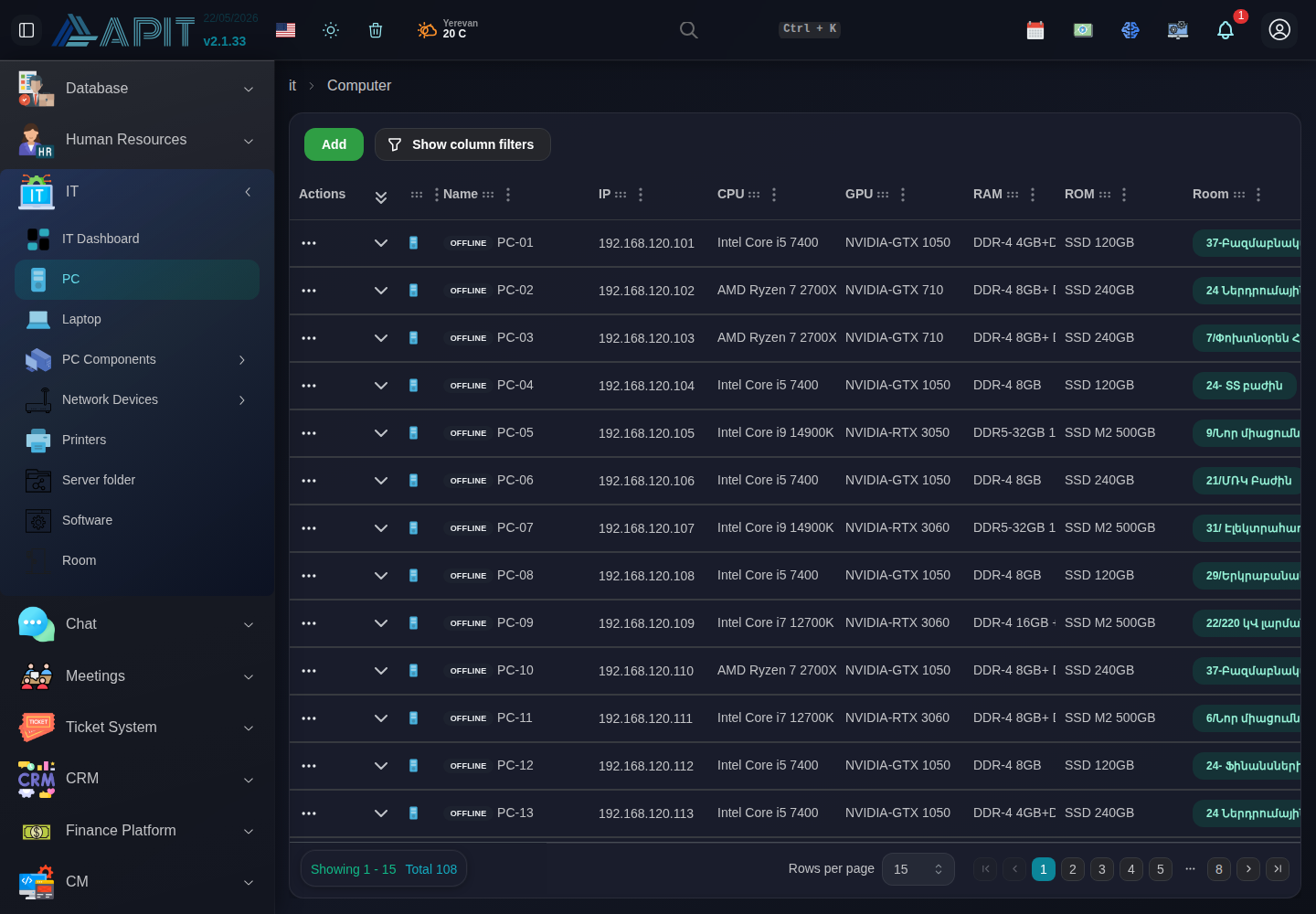
IT Assets gives administrators a structured inventory of hardware, rooms, devices, warranties, and software. It is designed for practical asset control, support visibility, and full asset lifecycle management. Every device tracks its assigned employee, purchase date, warranty expiry, repair history, depreciation, replacement schedule, QR code, maintenance plan, and current status (active, broken, repair, retired). IT is connected to tickets, HR users, security, and office maps, so approved IT tickets can trigger asset assignment, repair/replacement flows, device status changes, warranty follow-up, or office placement updates. PC and user assignment is kept in sync bidirectionally so both sides always reflect reality.
Built around the real APIT admin surface
Inventory PCs, monitors, printers, switches, routers, rooms, RAM, GPU, CPU, software, phones, warranties, attendance devices, and ticket-driven IT actions.
Core abilities
- PC, monitor, printer, router, switch, telephone, room, and SMB records
- RAM, GPU, CPU, ROM, software, and warranty-provider directories
- Asset lifecycle fields: assigned employee, bought date, warranty date, depreciation, QR code, repair history, maintenance schedule, replacement date
- Device status tracking: active, broken, repair, retired
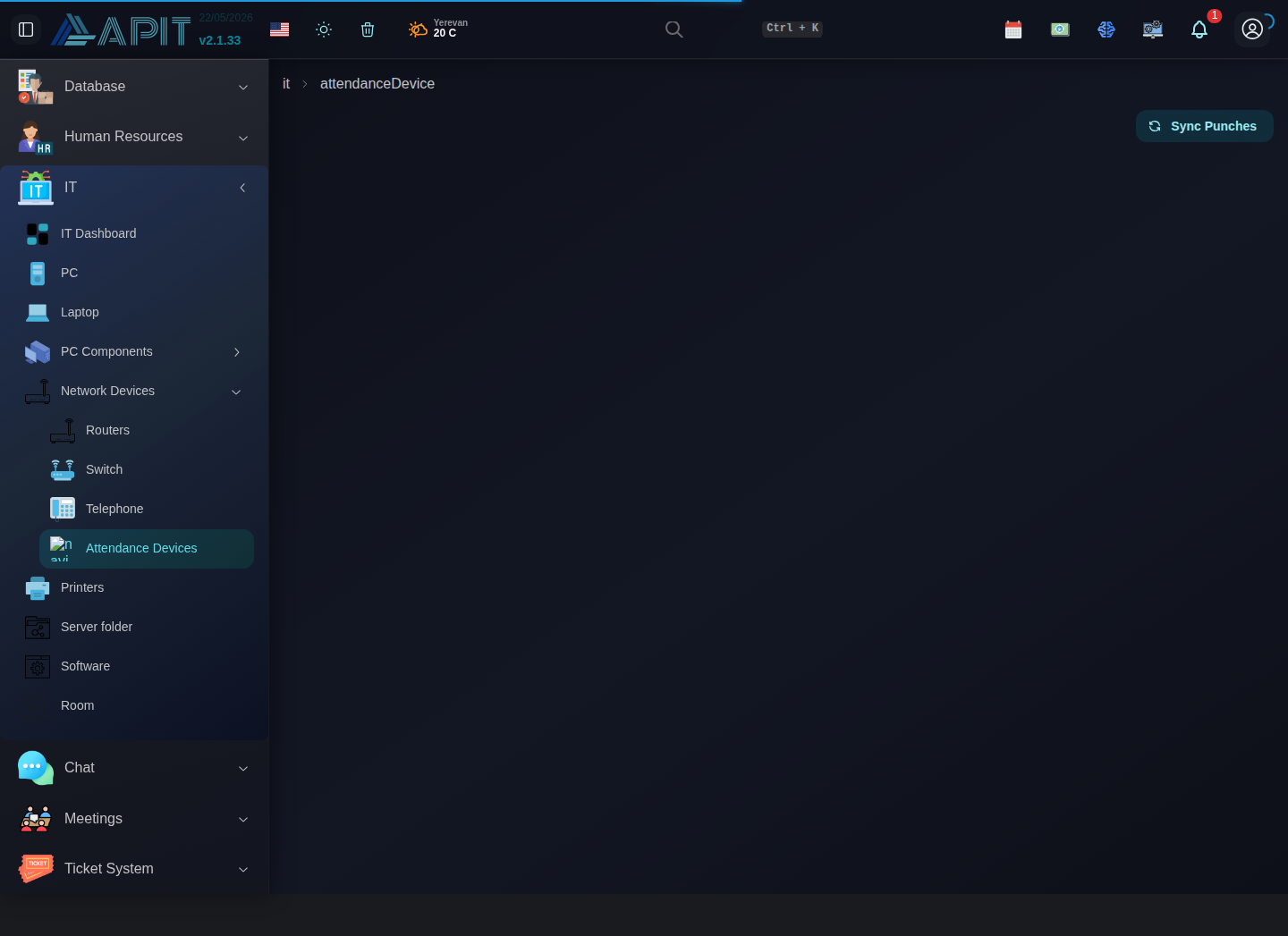
- Attendance-device administration
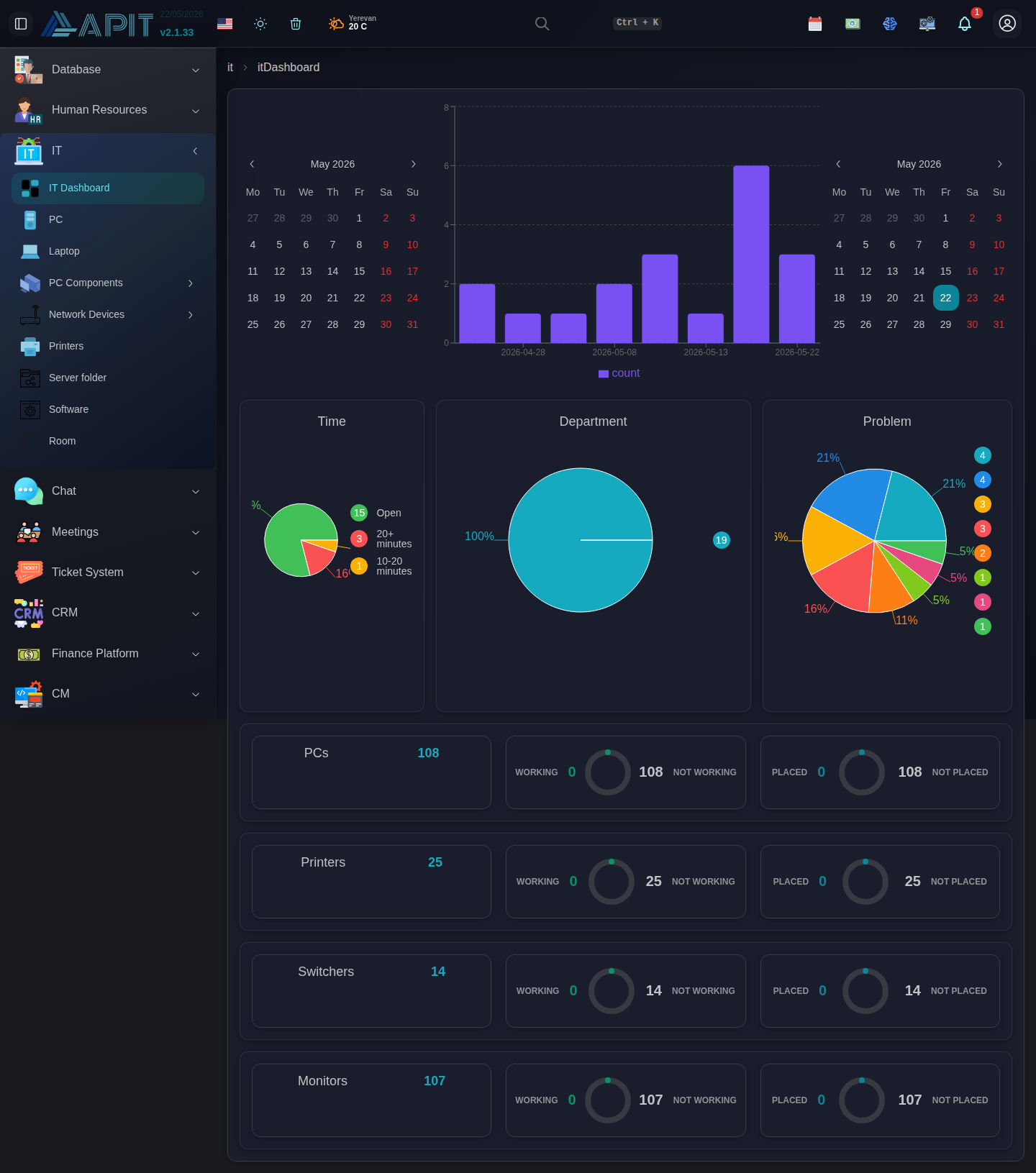
- IT dashboard for equipment overview
- Automatic asset actions from approved IT tickets
- Office map placement for PCs, routers, switches, cameras, cables, and users
Common workflows
- Register and audit hardware inventory with full lifecycle context
- Track warranties, repairs, depreciation, and replacement schedules
- Assign devices to employees with automatic bidirectional sync
- Connect attendance devices to HR workflows
- Approve IT tickets and update asset assignment, condition, or responsible user
- Use office maps to see where equipment, network devices, and cables are physically installed
Real product views from IT Assets
These images come from the generated APIT documentation screenshots and can be replaced later by DB-managed media.